


WELCOME TO EMC BOOKS +
Electromagnetic Compatibility Engineer / Author
David A. Weston | Blog
Latest Blog:
Available Now: From a Hod To An Odd EM Wave
Remarkable, Inspirational. Heart Warming, Evocative Memoir!
By: D. A. Weston
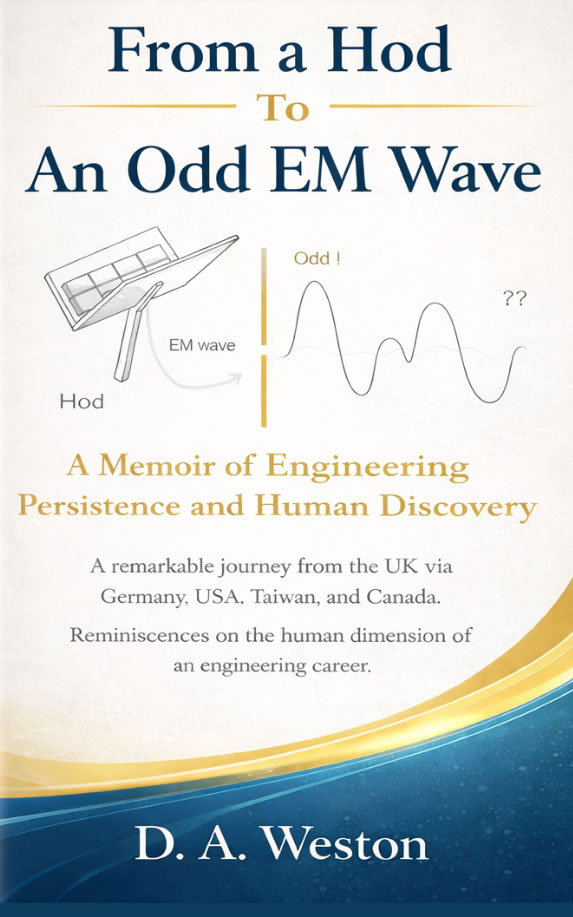
From a hod
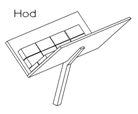
To
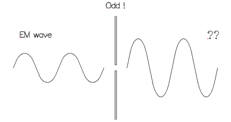
An odd EM wave
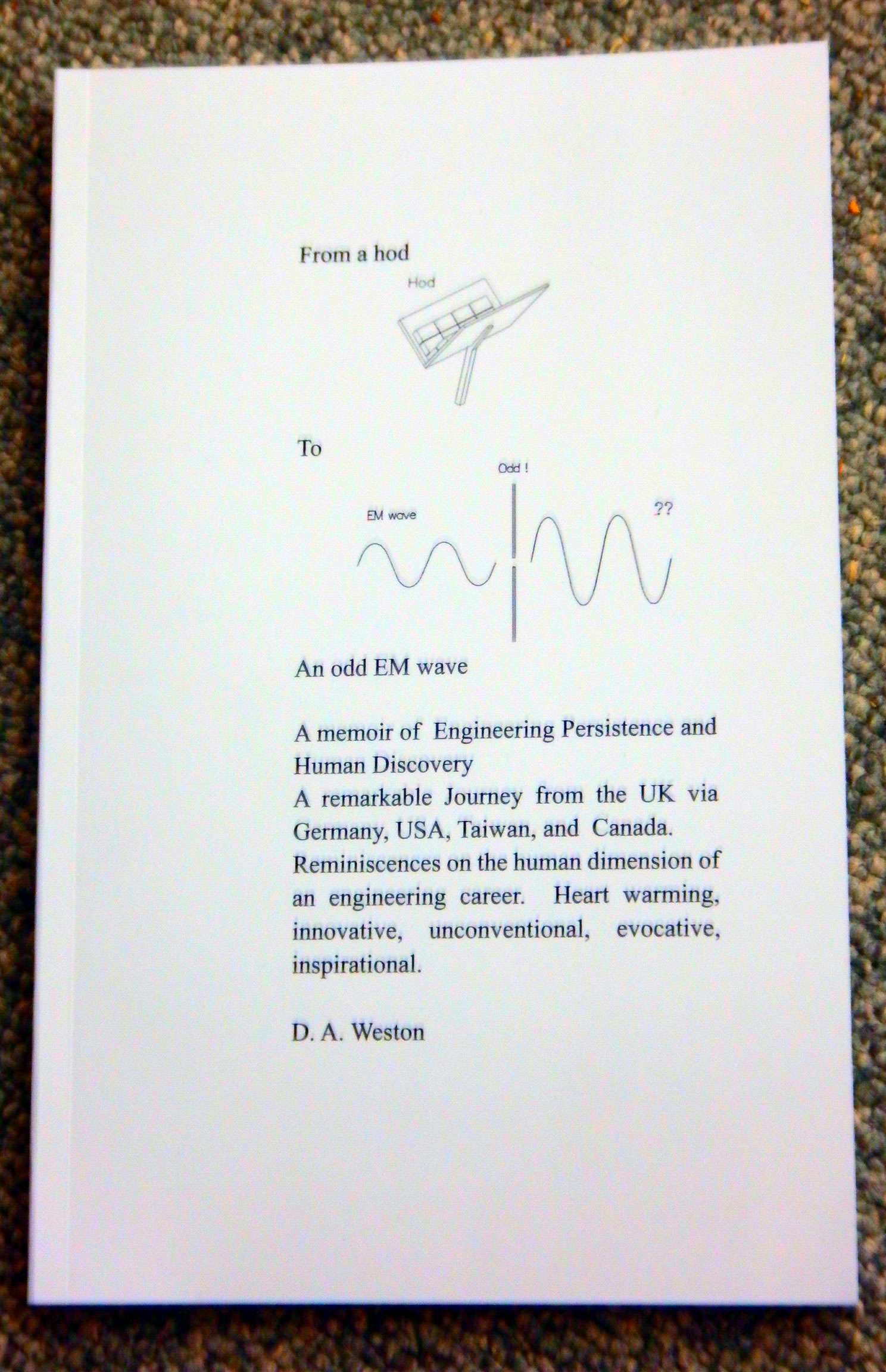
A memoir of Engineering Persistence and Human Discovery.
A remarkable Journey from the UK via Germany, USA, Taiwan and Canada.
David. A. Weston
Description
A memoir of Engineering Persistence and Human Discovery. Reminiscences on the human dimension of an engineering career. Charts an unconventional engineering career spanning multiple continents and decades, offering insights rarely found in traditional engineering literature. It starts at the age of 15 on a building site in England and ends, as described by a reviewer, as a distinguished engineer. A reviewer describes it as both heart warming and heart breaking. It serves as an inspiration and a practical roadmap.
eBook Available From:
Amazon.ca (Canada)
Amazon.com (USA)
Amazon.com.au (Australia)
Barnes and Noble
Indigo
Apple books
ebooks.com
overdrive.com
Fable.co
Glose.com
Thebookpatch.com
Fnac.com
Bestbookprice.co.uk
Redshelf.com
And more...
Book Reviews: "From a Hod To An Odd EM Wave" by D.A. Weston
My name is Kara McAndrew, and I'm an Assistant Editor at Macmillan. I recently had the opportunity to learn about From a Hod to an Odd EM Wave: A Memoir of Engineering Persistence and Human Discovery, and I wanted to personally reach out to express how impressed I was by the remarkable journey and breadth of experience reflected throughout your memoir.
What immediately captured my attention was the extraordinary trajectory of your career. Beginning as a construction laborer in post-war Britain and progressing to work on advanced electronics, aerospace systems, and internationally significant engineering projects is an inspiring testament to perseverance, curiosity, and lifelong learning. Your story beautifully illustrates how determination and adaptability can open unexpected paths throughout a professional life.
I was particularly fascinated by the way your memoir intertwines technological history with personal experience. Your firsthand accounts of developments in electronics, medical technology, communications systems, and aerospace engineering offer readers a rare opportunity to witness decades of innovation through the eyes of someone who actively contributed to that progress. By documenting these experiences, you preserve an important chapter in the history of engineering that might otherwise remain largely untold.
Equally compelling is your emphasis on the human side of engineering. Rather than focusing solely on technical achievements, you explore the relationships, ethical decisions, workplace dynamics, and cultural experiences that accompany scientific and technological advancement. Your reflections remind readers that engineering is ultimately a collaborative human endeavor, shaped as much by character and resilience as by technical expertise.
I was also deeply moved by your inclusion of personal encounters with individuals whose lives intersected with major moments in history, particularly your work alongside Rudolf Vrba. Experiences such as these add a profound historical dimension to the memoir while highlighting the unexpected ways that engineering careers can intersect with remarkable human stories.
What I found especially meaningful is your willingness to share both the triumphs and the challenges encountered over decades of work across multiple countries and industries. The memoir serves not only as a record of technological achievement but also as an encouraging example for younger engineers who may be navigating their own evolving careers in an increasingly interconnected world.
I would truly enjoy learning more about what inspired you to document these experiences, which period of your career proved the most rewarding to revisit during the writing process, and which lessons you hope future generations of engineers will carry forward after reading your memoir.
Thank you for sharing such a thoughtful and inspiring account of a life devoted to engineering, discovery, and human resilience. I look forward to hearing from you and wish you continued success with From a Hod to an Odd EM Wave: A Memoir of Engineering Persistence and Human Discovery and your future writing endeavors.
Warm regards,
Kara McAndrew
Assistant Editor
Macmillan
In From a Hod to an Odd EM Wave, the author strips away the myth of the solitary genius and reveals the messy, human reality behind technical breakthroughs. Spanning continents, decades, and disciplines, this memoir charts an unconventional engineering life where persistence meets curiosity.
You'll walk gritty construction sites, navigate the subtle politics of research laboratories, and witness the ethical crossroads that shape real-world innovation. Along the way, you'll meet unforgettable figures-from Rudolf Vrba, one of only four Auschwitz survivors to escape and later collaborate at the Medical Research Council, to the quietly forgotten children marked by Thalidomide, and a woman unjustly confined by a system that mistook refinement for illness.
Blending sharp humor with unflinching honesty, this book isn't just about circuits, equations, or patents. It's about the human dimension of engineering: the conversations, compromises, and quiet courage that turn observation into discovery. Whether you're an engineer, a historian of science, or simply someone who believes every great breakthrough begins with a person, this memoir offers a rare, ground-level view of how progress actually happens.
Step into the real world behind the white coat. Discover how an unlikely career reshaped what we know about the invisible forces that connect us all.
A concise memoir of an interesting engineering career. Starting with a description of the English education system at the time that directed David Weston onto a building site after school, despite not quite being in possession of the strength required to work on the hod, and moves through Weston’s career to working on deployable black boxes and medical treatments. Weston has had a varied number of jobs, which he explains easily as we move through his career and also around the world. What I liked about this memoir is that it doesn’t just focus on Weston’s life and career, he explains the context around having a passion for fixing electronics, but the school system directed him away from a more direct engineering path. He explains the history of the places he lived in Germany, giving us a broader context of the places as well as his experiences with the people. There’s descriptions of when his work took him to oil rigs in the North Sea, providing background of Ocean Prince and Ocean Ranger sinkings. It makes this an interesting read for curious minds. The more technical aspects of Weston’s jobs and later inventions are explained in a way that anyone can understand and in a way that you can feel his interest in the subject, which then rubs off on the reader. There’s appendices at the end of the book going into these projects in even greater detail which is a nice touch, as the information is included but doesn’t slow down the pace of the overall narrative. From A Hod to an Odd EM Wave is quick and easy to read, I think that it is a concise entertaining memoir that covers an interesting engineering career.
Charlotte Walker, A LoveReading Ambassador
Remarkable, Inspirational , heart warming evocative memoir. A memoir of Engineering Persistence and Human Discovery. Reminiscences on the human dimension of an engineering career. Charts an unconventional engineering career spanning multiple continents and decades, offering insights rarely found in traditional engineering literature. It starts at the age of 15 on a building site in England (on the hod) and ends, as described by a reviewer, as a distinguished engineer having found an odd EM wave. A reviewer describes it as both heart warming and heart breaking. It serves as an inspiration and a practical roadmap.
ebooks.com
From a Hod to an Odd EM Wave follows D. A. Weston’s life from a rough start in postwar Britain to a long, winding career in engineering and research. The book moves through building sites, radio repair shops, mental-health research labs, nuclear facilities, and international consulting work. Along the way, Weston meets people who are brilliant, kind, petty, tragic, and sometimes heroic. His memoir mixes personal anecdotes with technical curiosities, plus emotional reflections on war, ethics, science, and the strange places a career can lead. It feels like a tour through the human side of engineering, full of sharp memories and surprising turns.
I found myself pulled in by the plainspoken honesty in his stories. He writes in a way that feels like the reader is sitting across from someone who has lived five lifetimes and is finally ready to talk. Some scenes hit hard. The thalidomide children, the chaotic fights in the lab, the grim humor around radiation work, and the quiet sadness of patients stuck in outdated psychiatric systems. Other parts feel warm and almost nostalgic. His delight in radios and tape recorders, his pride in small technical victories, his awe at mentors who believed in him. At times I laughed, then suddenly felt my stomach drop. The emotional swing made the book feel alive, even when the writing wandered.
The parts that lingered most for me were the stories that touched on moral courage. Rudy’s escape from Auschwitz and his fight to warn the world. The reminders that science is done by flawed people who can steal credit, cut corners, or act with unexpected kindness. Weston never hides his own missteps either. That humility made me trust him more. Sometimes the prose felt abrupt, but I didn’t mind. It matched the way memories surface in real life. The mix of technical curiosity and human vulnerability kept me hooked.
From a hod to an odd EM wave is ideal for readers who enjoy memoirs with grit and candor, especially those curious about science and engineering from the inside. It is raw, personal, and full of feeling. I recommend it to anyone who likes hearing about life told straight from the heart and who does not mind a ride that goes from light to heavy and back again.
Titan book review
www.readerviews.com
Providing book by book publicity for Indie Authors since 2005.
~ From a Hod to an Odd EM Wave ~
5★ - Moving Beyond Class Limitations
My grandfather carried a hod after moving to California during World War II. His job was slightly different than Weston’s, as he hauled roofing tar up the ladder instead of bricks. But make no mistake: this is one of the toughest gigs that a human being can have, and it’s usually done under the hot sun, to boot. I loved the fact that author D.A. Weston addresses this and other class issues so directly in From a Hod to an Odd EM Wave: A memoir of engineering persistence and human discovery, his new memoir, which, sadly, illustrates how merit and talent are not always enough to get by in this world. In fact, Weston’s book reminds us that even if you're born with a bit of talent, you had better also have equal measures of dogged determination and patience in the face of institutional injustice and absurdity.
The ball gets rolling in postwar England, so things are already grim -- not exactly the rock and roll and cheeseburger haven that America had become, with a new swath of teenagers flush with disposable cash. The phenomenon was slightly different in Europe, and Weston, as a working-class lad, had to struggle first with being refused an academic pathway in public school: I explained that my hobby was building electronics and that I wanted to repair radios and televisions. I guess he said I could not do that because I was in the middle stream of the Secondary Modern.
There are more instances of these sorts of rude awakenings throughout the memoir, with the author continually confronting similar injustices. When he finally lands a job at a radio and TV repair shop, he notices he is not the only one who’s suffering:
The son of the owner of the shop had trained and worked as an airline pilot, but because his wife thought that that was too dangerous, he had to work repairing radios and televisions, so he was not a happy man. I had started attending school one day a week and did that for five years. His job at the Ministry of Aviation pushes absurdity to the next level. Not only is it dangerous – he gets blown across the room from the shock of a 4000V terminal – but the hierarchical standards are mind-numbing: “The lower the job you had, the better the title. Above a particular grade, your toilet (washroom, restroom) was labeled officers and below gentlemen.” Weston finally gets real formative experience and succeeds in building an EEG calibrator. But the hard life lessons come when Weston meets Auschwitz survivor Rudolf Vrba, whose experiences truly drive home the fact that humans are often the architects of their own demise. His commentary: “The French were an utterly amenable mass of human putty in the hands of experienced artists.”
Weston does achieve success, but it comes from perseverance and not simply doing what others did. In the late chapters -- whether in Germany, on the North Sea oil rigs, or in North America -- we see a consistent pattern. Weston makes it his goal to be a problem-solver in high-stakes environments. He is less interested in following established theory than in diagnosing failures that others overlook, and he relies on practical reasoning developed through experience. This mindset is already evident earlier in his career. While working at the Medical Research Council, he meets children affected by thalidomide -- patients “whose mothers had taken thalidomide... [with] shortened arms and legs” who nevertheless “all seemed very intelligent.” He refuses to treat them as abstract medical cases, working with them in a direct and humane manner and engaging with them as individuals. That same instinct is reflected in his engineering work, where success depends on observation, improvisation, and the courage that it takes to challenge assumptions.
In any case, it is great advice, no matter which world you happen.
Reviewed by Paul Knobloch for Reader Views (03/2026)
Beginning with humble origins as a construction labourer in post war Britain (on the hod), it takes readers through a progression from radio and television repair to sophisticated electronic design and work on NASA’s Canadarm and aircraft systems.
The career trajectory serves as both inspiration and a practical roadmap for engineers at various career stages, although it also holds considerable interest for the general reader.
What distinguishes this memoir is an unflinching focus on the human dimension of engineering practice. It documents the personalities, workplace politics, and ethical challenges that shape technical work. An account of Rudolf Vrba, one of only four people people to escape Auschwitz, and working alongside him, at the Medical Research Council, is both heart warming as well as heart breaking.
Particularly valuable are the first hand accounts of technological developments from the 1960s through the 2000s. The description of early EEG techniques, deep-sea diving communications, and the Canadian Space Program’s contribution to the Space Shuttle and the Space Station descriptions the younger engineers might not encounter elsewhere. The international experience, spanning the UK, Germany, the USA, Taiwan, and Indonesia, offers instructive comparisons of cultures and practices. The book describes innovative approaches to problems such as helium leak detection and Transcutaneous Magnetic Stimulation. From a hod to an odd EM wave succeeds as both a professional memoir and a historical document. It captures the reality of engineering work that textbooks and technical papers rarely address. It provides a valuable perspective on how persistence and adaptability can lead to meaningful contributions.
It shows that engineering is fundamentally a human endeavour.
Professor Alistair Duffy
In "From a Hod to an Odd EM Wave", David A. Weston invites readers into a vivid, deeply personal memoir that weaves together a lifetime of engineering innovation, global experiences, and unforgettable human encounters. From humble beginnings carrying bricks on a construction site in post-war England to groundbreaking work in electromagnetic compatibility, Weston’s career has spanned continents and disciplines. Each chapter is rich with insight, humor, and resilience.
This isn’t just a memoir for engineers. It’s a testament to the social and emotional dimensions of scientific work. Weston candidly explores the people, politics, and persistence behind his contributions — from his time at the Medical Research Council to his leadership at EMC Consulting Inc. Along the way, he shares remarkable stories involving Cold War-era technologies, mental health research, survivor accounts from Auschwitz, and even a child’s ride in a Messerschmitt microcar.
David A. Weston is a certified iNARTE EMC engineer and life member of IEEE, with 55 years of experience in electronic design and over four decades specializing in EMC. He is also the author of the authoritative Electromagnetic Compatibility, Methods, Analysis, Circuits, and Measurement (CRC Press, 2017), now in its third edition.
If you’re looking for a story that goes beyond circuits and shielding to reveal the human spirit behind science, this is it.
Interference Technology Magazine July 2025
Phone: (613) 269-4247
Email: emccons0@gmail.com