



BOY WHOSE MOTHER HAD TAKEN THALIDOMIDE
In the memoir I talk about a children’s hospital alongside the Medical Research Council where I worked. In the hospital there was a ward for children physically affected because their mothers had taken Thalidomide. Although perfectly fit and healthy these children had never left the hospital because there was a concern that the general public could not deal with their deformity, often no more than small arms and legs. Some of the children’s parents visited and others not, so these children were abandoned and imprisoned.
A boy asked me if I could take him out in my Messerschmitt bubble car. There were no doctors around and a sympathetic nurse agreed on the understanding that he was not to leave the car.
The Messerschmitt was ideal as it was low to the ground and the rear narrowed in the shape of a fish tail. This meant that the child was surrounded by car on both sides. There were no seat belts in those days so I drove very carefully. The boy wanted to go into a fast food restaurant like McDonalds. We went in and did not notice any adverse reaction from the other customers.
The car was a Messerschmitt KR200, or Kabinenroller (Cabin Scooter), is was a three-wheeled bubble car designed by the aircraft engineer Fritz Fend and produced in the factory of the West German aircraft manufacturer Messerschmitt from 1955 until 1964.
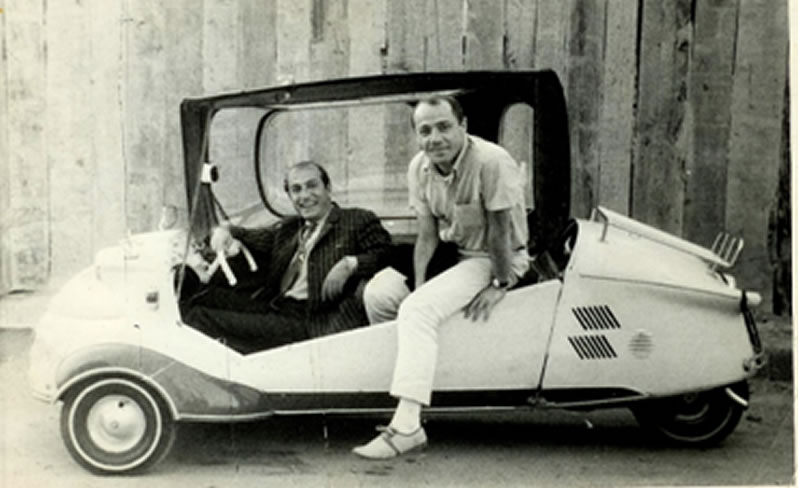
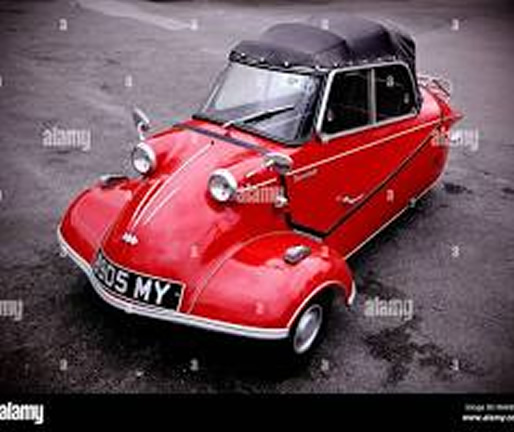
The Messerschmitt bubble car (primarily the KR200) was built using aircraft engineering techniques applied to a 1950s microcar, featuring a lightweight steel tubular frame and aluminum fuselage with a signature Plexiglas or fabric canopy.
Designed by aircraft engineer Fritz Fend, it utilized a 191cc two-stroke rear-mounted engine, tandem seating, and a three-wheeled layout for maximum efficiency, safety, and maneuverability.
It featured a distinctive, hinged Plexiglas (acrylic glass) top which served as the canopy, allowing 360-degree visibility or a with a fabric top..
It had tandem (front-to-back) seating for two passengers allowed for a very narrow body. It featured a steering handlebar instead of a wheel, designed for precision control, and a four-speed transmission that could run in reverse. Gear changes were made by pushing a lever forward or back.
Top speed was 90km.
Apparently by reversing the engine it could theoretically do 90km hour in reverse although I never found how to do that. It was so light that I would just push it backwards.
I only ever had it serviced once. It needed the engine fixing. I took the engine out and my father took it to a workshop with the engine under his arm. When fixed I then reinstalled it
There were over 30,000 built between 1955-1964.
Apr 23, 2021 — The funny little car is making a comeback with its electric version already in production.
A four wheel version was made with a slightly more powerful engine, as with a passenger the car struggled on hills and so this was my dream machine.